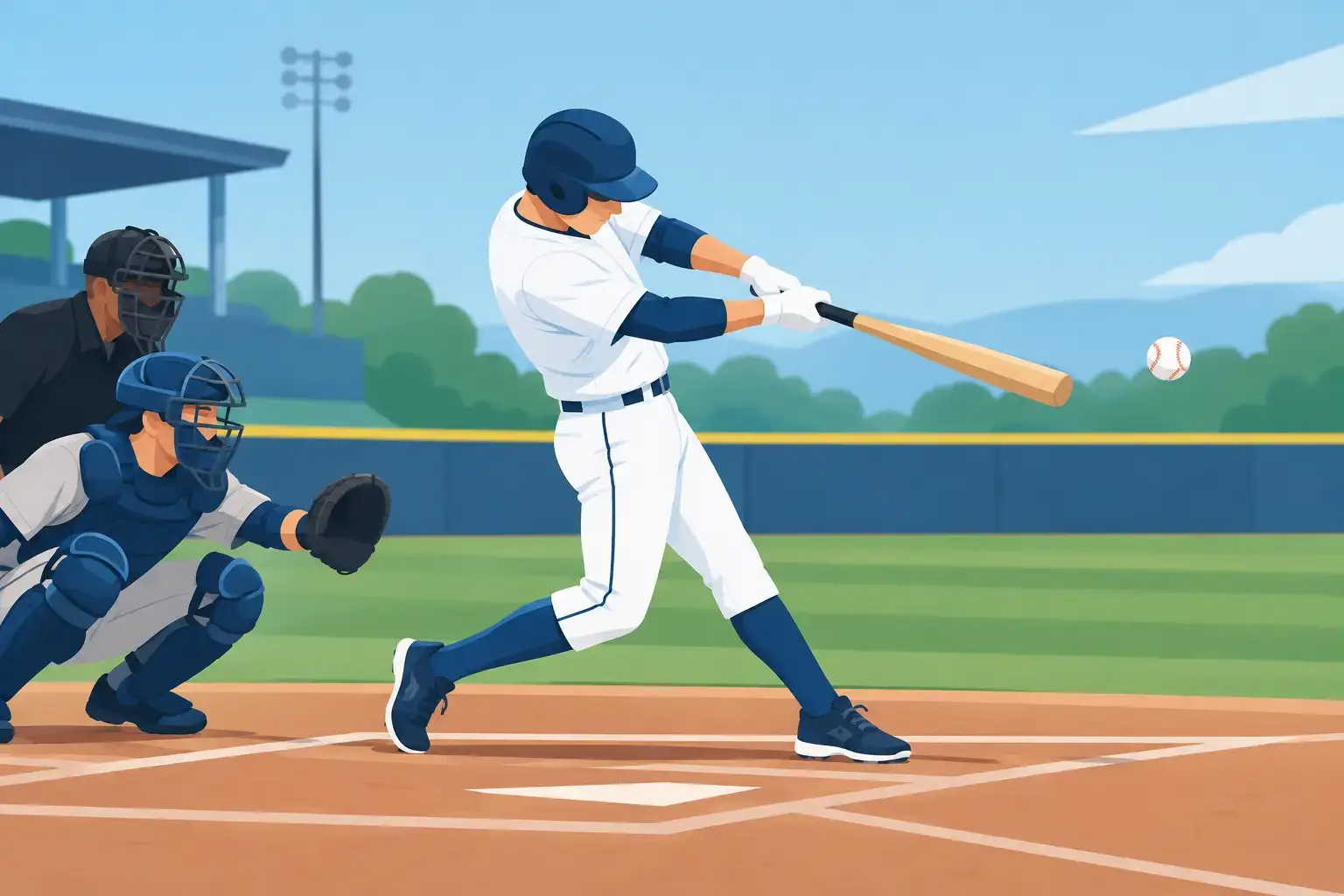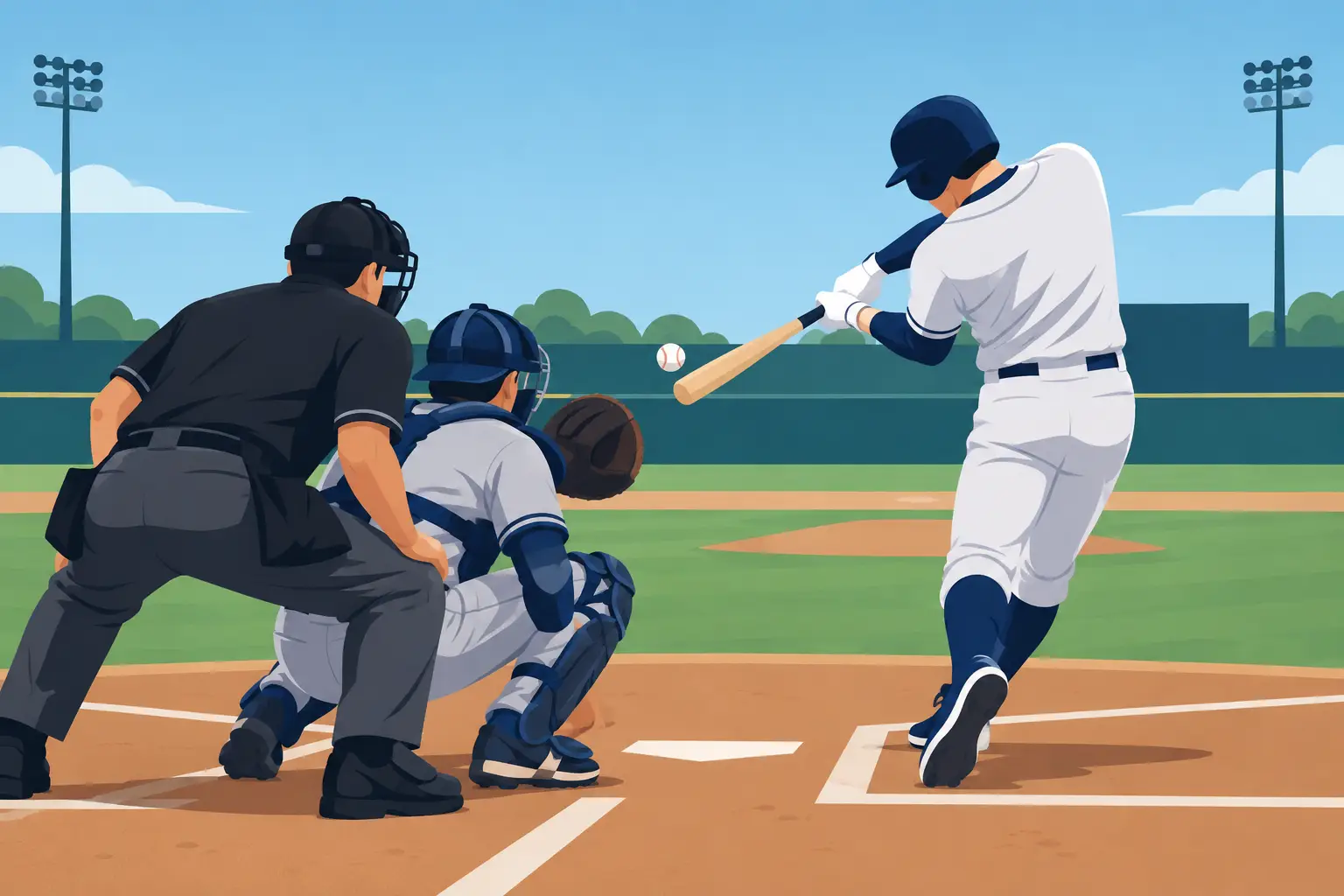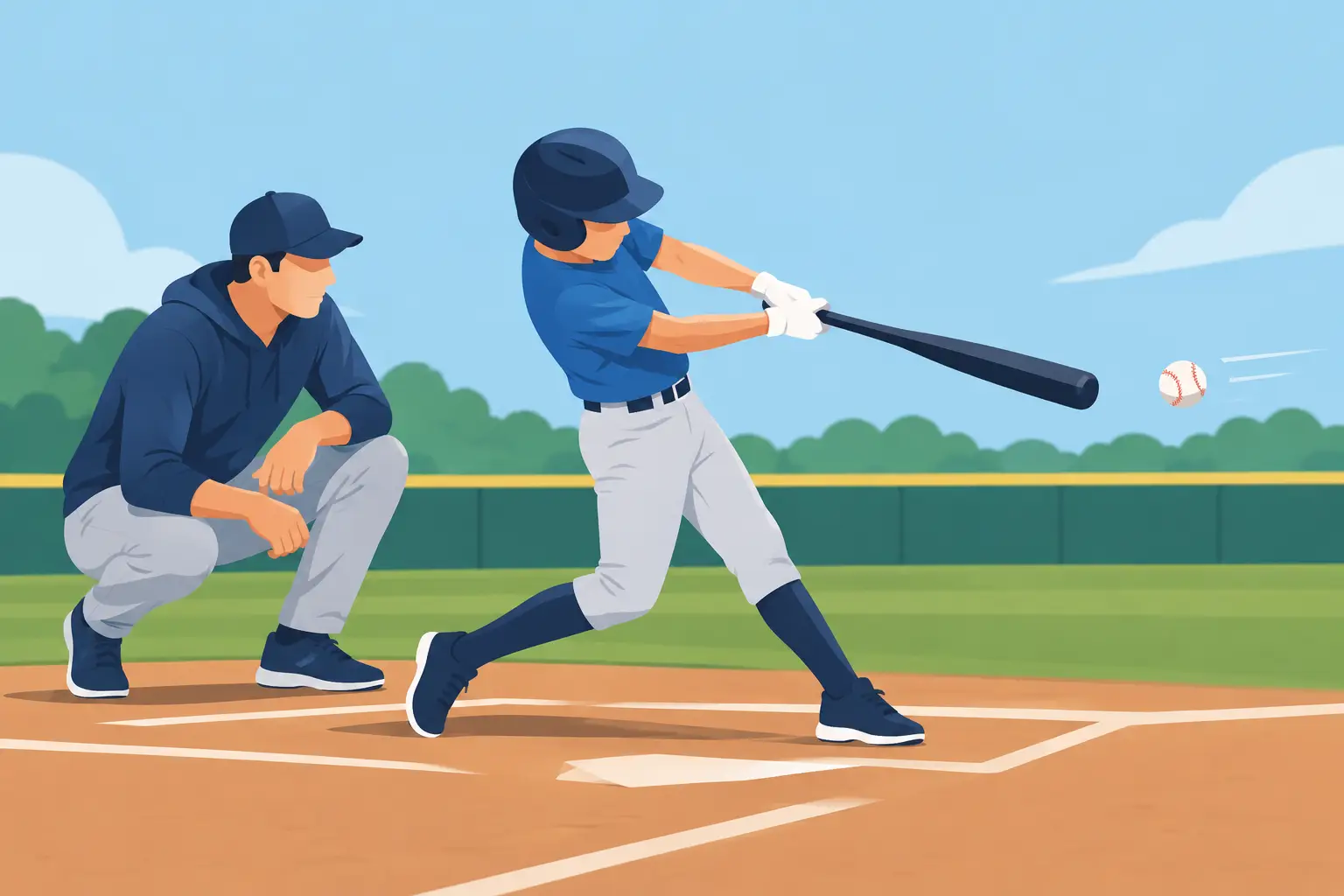
A catcher comes up throwing on a steal attempt, and the batter is still near the plate. Contact happens. The throw sails into center field. Everyone in the stands has an opinion, but the real question is simple: when does a batter interfere? The answer depends on whether the batter actually hindered the catcher’s chance to field or throw the ball.
Batter interference is one of those calls that looks obvious after a replay and gets complicated in real time. The key is not merely that the batter and catcher touch. Umpires must decide whether the batter’s movement prevented the catcher from making a play.
What batter interference means
Batter interference is an offensive interference call. It occurs when the batter illegally hinders the catcher while the catcher is fielding or throwing. Most often, it happens on a steal attempt, a dropped third strike, a bunt near home plate, or a play developing at the plate.
The usual result is straightforward: the batter is out, the ball is dead, and runners return to the bases they legally occupied when the interference occurred. But baseball rules always require you to look at the exact play. The level of play and rule code – professional, college, high school, or a local league modification – can affect the administration.
The basic idea remains the same: a batter cannot use his body, bat, or movement to take away the catcher’s opportunity to make a play.
When does a batter interfere with the catcher?
A batter interferes when his actions hinder the catcher’s fielding or throwing effort. Stepping out of the batter’s box into the catcher’s throwing lane is the clearest example.
Imagine a runner on first base attempting to steal second. After the pitch, the batter steps backward across home plate and blocks the catcher’s arm as the catcher starts to throw. That is batter interference. It does not matter that the batter may claim he was simply getting out of the way. If his movement hinders the throw, the umpire can call interference.
The same principle applies if the batter swings, misses, and then makes a second movement that contacts the catcher or disrupts the throw. A batter who intentionally reaches his bat behind him to block a throw is interfering. So is a batter who leans into the catcher, waves an arm into the throwing lane, or otherwise prevents a clean play.
Intent can matter, especially on unusual plays, but it is not a free pass for accidental movement. A batter who creates the hindrance can be called for interference even if he did not mean to help the runner.
The batter’s box matters
The batter has a right to occupy the batter’s box. That right is important when judging close calls.
If the batter remains legally in the box and makes no movement to hinder the catcher, the catcher generally cannot create interference simply by making contact with him while throwing. The catcher must deal with a batter who is where he is entitled to be.
That protection has limits. A batter cannot stay planted in the box and then lean, step, twist, or make another movement that interferes with the catcher’s play. The umpire is judging the batter’s actions, not just where his feet began.
For players, the best habit is simple: after the pitch, stay balanced and avoid unnecessary movement around the plate when a catcher may be throwing. For coaches, teach hitters that “I was in the box” is not a complete defense if the hitter’s movement blocked the catcher.
Common game situations
A runner steals and the batter blocks the throw
This is the classic call. The catcher receives the pitch and attempts to throw to second base. The batter steps across the plate or backs into the catcher, and the throw is affected.
The batter is called out for interference. The ball becomes dead, so the runner who tried to steal is normally sent back. If the catcher’s throw already retired the runner before the interference is recognized, the applicable rule code and timing of the play can matter, which is why umpires need to see the entire action before enforcing the penalty.
The batter interferes on a dropped third strike
A dropped third strike can produce a fast, confusing play. The catcher may be trying to locate the ball, tag the batter-runner, or throw to first base. If the batter hinders the catcher’s attempt to make that play, interference may be called.
For example, the batter swings at strike three, the catcher drops the pitch, and the batter-runner deliberately bumps the catcher while moving toward first. That is not legal baserunning. The batter can be declared out for interfering with the catcher’s fielding attempt.
A bunt stays near home plate
On a bunt, the catcher may need to field the ball in front of the plate. A batter who remains in the way, kicks at the ball, or blocks the catcher from reaching it can interfere.
There is a difference between a batter trying to avoid a fair bunted ball and one who impedes the defense. Umpires look for a clear hindrance. If the batter is making a reasonable effort to get out of the way and the catcher still has access to the ball, interference may not be the right call.
The follow-through hits the catcher
This is where many arguments start. A batter’s natural follow-through can carry the bat into the catcher after a swing. Not every instance is batter interference.
Under commonly used professional-style interpretations, inadvertent contact on a backswing is generally treated differently from a batter who actively hinders a catcher attempting a play. The ball may be ruled dead and runners may be returned, but the batter is not automatically out just because the bat contacted the catcher after the swing.
Because high school and college codes can handle backswing or follow-through situations differently, coaches and umpires should confirm the rule set governing their game. Do not assume a Major League Baseball ruling automatically applies in a youth, scholastic, or college contest.
Batter interference vs. catcher interference
The names are easy to reverse, but the responsibility points in opposite directions.
Catcher interference happens when the catcher illegally hinders the batter’s opportunity to swing, usually by contacting the bat during the pitch. The batter is generally awarded first base.
Batter interference happens when the batter hinders the catcher’s opportunity to field or throw after the pitch. The batter is generally called out.
One useful way to remember it: if the catcher disrupts the swing, think catcher interference. If the batter disrupts the catcher’s play, think batter interference.
There is also a related play that is not always described as batter interference. If a fair batted ball strikes the batter in fair territory before passing an infielder, the batter may be out because he was touched by his own batted ball. That is a separate rule situation. The batter did not necessarily interfere with the catcher, but the ball has contacted him illegally while it is live in fair territory.
What umpires are watching for
Umpires do not call batter interference because a play looks awkward. They need a rule-based reason to decide that the batter hindered the defense.
They are watching the batter’s location, any movement after the pitch, the catcher’s legitimate path to the ball or throwing lane, and whether the catcher had a real chance to make a play. They also consider whether contact was part of a normal swing or follow-through, or whether the batter made an extra movement that caused the problem.
This is why two plays that look similar from the bleachers can have different rulings. In one, the batter may be legally standing still in the box. In the other, he may have stepped backward at the exact moment the catcher tried to throw.
A practical rule for players and coaches
Teach hitters to finish the swing, locate the ball, and avoid becoming part of the defensive play. If the catcher is trying to throw, do not step across the plate, do not reach back with the bat, and do not make a sudden movement into the throwing lane.
For coaches and parents, resist the temptation to judge the call solely by whether there was contact. Contact alone is not the standard. Hindering the catcher’s fielding or throw is the standard.
Knowing that distinction turns a confusing argument into a teachable moment. Baseball Rules in Black and White app is built for exactly those moments: clear rule language, practical examples, and instruction you can review before the next close play at home plate.