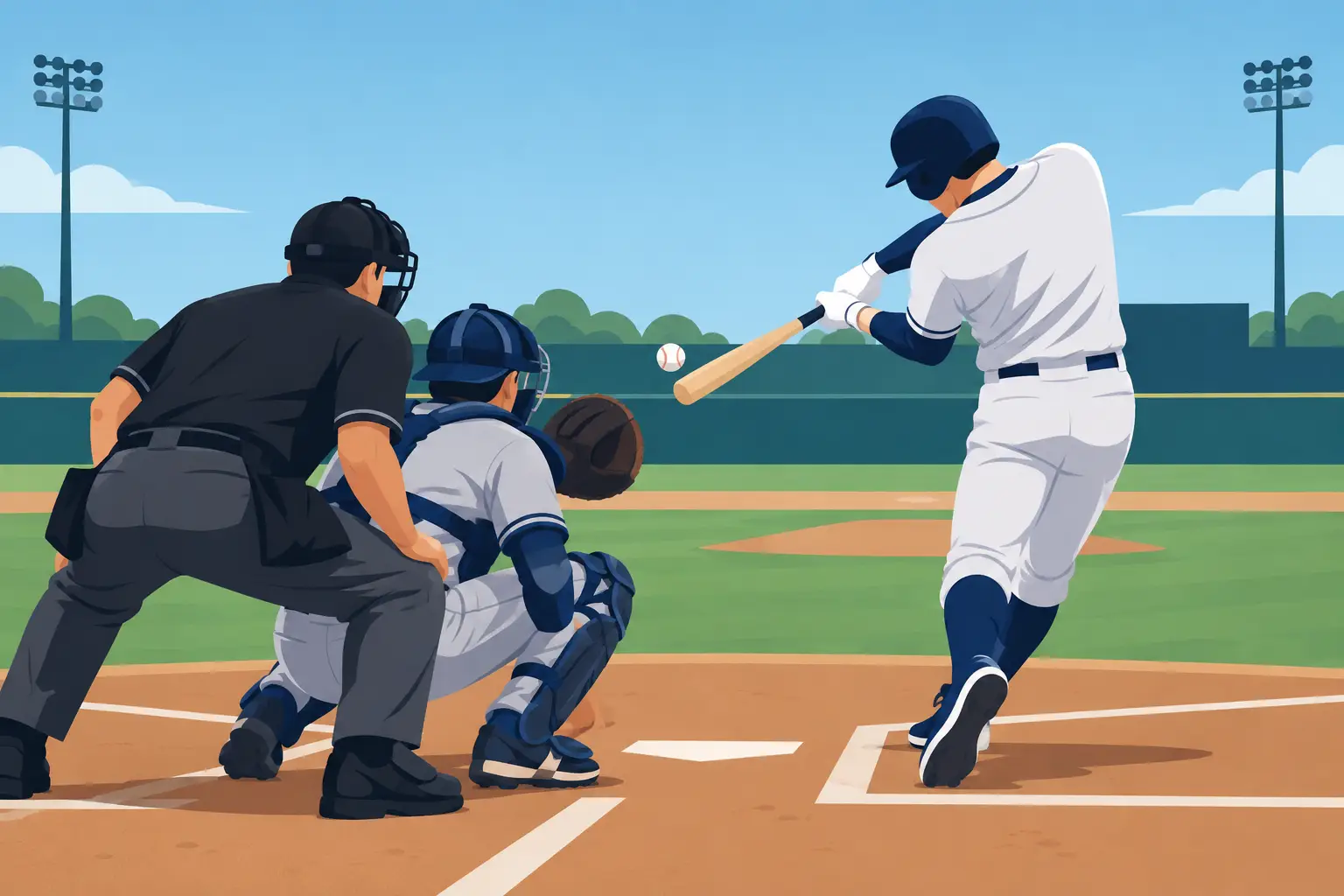
A pitch clock violation can change a 3-2 count, put the tying run on base, or end an at-bat before the pitcher releases another pitch. That is why baseball pitch clock rules explained in plain English are useful for more than major league fans. Players, coaches, parents, and developing umpires need to recognize the timer, know who is responsible, and understand what happens when it reaches zero.
The goal is straightforward: keep the game moving by limiting avoidable delays between pitches. The clock does not rush a pitcher through a legal delivery or take away a hitter’s chance to compete. It sets clear deadlines for everyone involved. Once you know the few numbers that matter, most pitch-clock situations are easy to follow.
What Is the Baseball Pitch Clock?
The pitch clock is a visible countdown used to regulate the time between pitches. In Major League Baseball, the pitcher must begin the pitching motion before the clock expires. The required time depends on whether runners are on base.
With the bases empty, the pitcher has 15 seconds. With one or more runners on base, the pitcher has 18 seconds. The extra three seconds recognizes that pitchers must pay attention to runners and may need to vary their looks, holds, and pickoff moves.
The clock is not a judgment about a pitcher’s pace or style. A deliberate pitcher can still work successfully within the rule. The issue is whether the pitcher starts the delivery on time.
Baseball Pitch Clock Rules Explained: The Key Times
For most people watching or playing under MLB-style rules, four numbers tell the story: 15, 18, 8, and 30.
The 15-second clock applies with no runners on base. The 18-second clock applies with runners on base. The batter must be alert to the pitcher with at least eight seconds remaining on the clock. A new batter gets 30 seconds to be ready after the previous batter’s plate appearance ends.
Being “alert to the pitcher” is more specific than merely standing near home plate. The batter must be in the batter’s box and looking toward the pitcher. A hitter who is adjusting batting gloves, staring at a coach, or stepping in too late can be charged with a violation even if the pitcher has not begun the delivery.
The catcher also has a responsibility. In MLB, the catcher must be in the catcher’s box by the time there are nine seconds left on the pitch clock. This prevents the defense from creating a delay that leaves the pitcher unable to deliver on time.
The timing sequence matters. Once the pitcher has the ball and is ready under the rule’s timing procedures, the clock begins. Players should avoid treating the clock as something they can negotiate after it is already running. The best habit is to be prepared before the pitcher receives the ball.
What Happens When the Clock Expires?
The penalty is simple, and it has real consequences. If the pitcher violates the pitch clock, the batter is awarded an automatic ball. If the batter violates it, the umpire calls an automatic strike.
No pitch is thrown on an automatic ball or strike. That distinction matters for scoring, pitch counts, and game awareness. A pitcher can walk a batter because of a clock violation. A hitter can strike out because of one. If the violation produces ball four or strike three, the plate appearance is over.
For an umpire, the call should be prompt and clear. For players and coaches, arguing after the countdown has expired rarely helps. The better question is whether the player met the requirement before the clock reached zero.
Pickoffs, Step-Offs, and Disengagements
The most misunderstood part of the pitch clock is often the limit on disengagements. A disengagement occurs when the pitcher steps off the rubber or makes a pickoff attempt. In MLB, the pitcher is generally allowed two disengagements during each plate appearance.
After two, a third disengagement is risky. The pitcher can make it only if the action results in an out or a runner advances. If neither happens, it is a balk. The runner or runners are awarded the next base.
Here is a common example. A runner is on first base, and the pitcher has already thrown over twice during the at-bat. The pitcher tries a third pickoff, but the runner safely returns to first. That is a balk because the third disengagement did not retire the runner or cause the runner to advance.
This rule does not mean a pitcher has only two pickoff throws for an entire inning. The count resets when the plate appearance ends. It also does not prohibit a pitcher from using a third disengagement when the situation truly demands it. A catcher may spot a runner leaning too far, for example. The pitcher can still throw over, but the defense must get the out or accept the consequence.
A successful stolen base can also reset the situation because the runner has advanced. That changes both the base-running picture and the pitcher’s available options. This is one reason runners may become more aggressive after two disengagements.
When Does the Pitch Clock Reset?
The clock is not supposed to punish normal baseball events. It resets after certain actions, including a time-out, a mound visit, an injury delay, or a dead ball. A new plate appearance also starts with its own timing sequence.
At the plate, batters have limited time-outs. In MLB, a hitter is generally allowed one time-out per plate appearance. A batter who has already used that time-out cannot simply step away whenever the clock gets uncomfortable. Coaches should teach hitters to handle routine adjustments early, before the countdown becomes a problem.
Pitchers may also receive relief in unusual situations. A broken bat, an equipment issue, or a legitimate safety concern can create a dead ball. But players should not assume every request pauses the clock. The umpire decides whether time is granted.
Why Pitch Clock Rules Can Look Different in Youth Baseball
Do not assume that every baseball organization uses the MLB clock. Youth leagues, high schools, colleges, travel tournaments, and local adult leagues may use different timing rules or no pitch clock at all. Some adopt a 20-second clock. Others have limits on warm-up pitches or between-inning time without using the full MLB system.
That is why coaches and umpires should review the competition’s rules before the first pitch. Ask whether a clock is in use, when it starts, what penalties apply, and whether pickoff limits are part of the rule set. A team can prepare all week for one rule and still be caught off guard if the tournament uses another.
For parents and fans, this is also a useful reminder: a call seen in a professional game may not apply at a local game. The principle may be familiar, but the exact timing and enforcement can differ.
Practical Habits That Prevent Violations
Pitch-clock success usually comes from routine, not speed. Pitchers should get the sign promptly, establish their set position, and avoid unnecessary movements after receiving the ball. Catchers can help by returning the ball quickly and being in position before the final seconds.
Hitters should enter the box with a plan. Finish the adjustment routine before the pitcher is ready, look up with eight seconds remaining, and save the permitted time-out for a moment that truly requires it. A player who waits for the clock to create urgency is already making the at-bat harder.
Coaches can make the rule part of practice. Run live at-bats with a visible timer, let pitchers work through runners-on-base situations, and include third-disengagement decisions. Players learn the rule faster when they feel the time pressure in a controlled setting instead of meeting it for the first time in a close game.
The pitch clock rewards preparation, but it does not replace baseball judgment. A pitcher still has to read the runner. A hitter still has to recognize the pitch. An umpire still has to apply the rule accurately. When questions come up after a game, Baseball Rules in Black and White can help turn a confusing call into a rule you can recognize with confidence before the next first pitch.