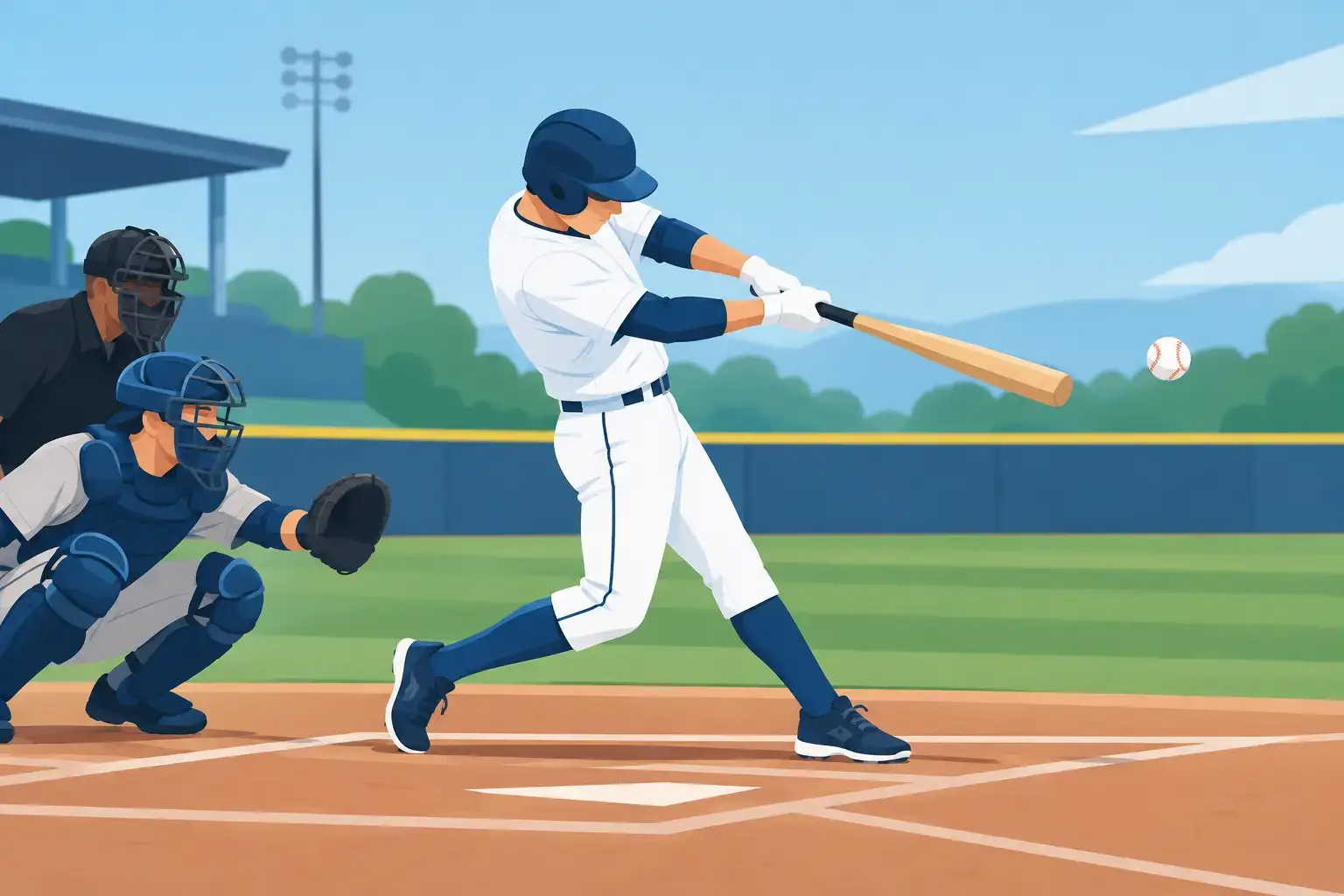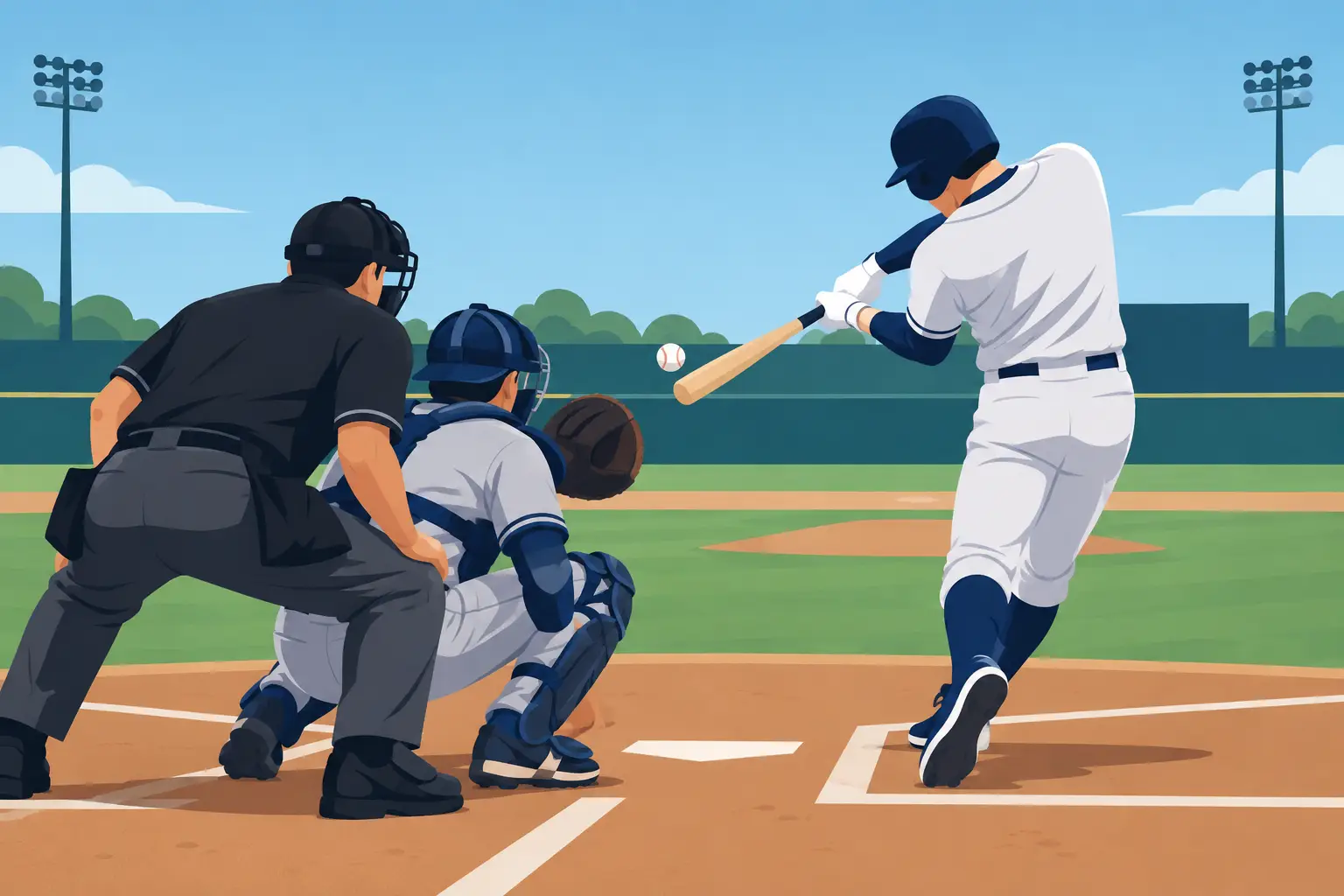
A catcher squeezes a ball that barely touches the bat, the umpire signals strike, and runners suddenly take off. That is the moment when the baseball foul tip rule explained correctly can settle an argument fast. A foul tip is not simply a foul ball that goes backward. It is a specific kind of batted ball with a major consequence: the ball remains live.
For players, parents, coaches, and developing umpires, the key is to recognize the difference before reacting to the result. A foul tip can produce a strikeout, allow a stolen base, or lead to a runner being thrown out. A regular foul ball cannot do any of those things because play stops.
What Is a Foul Tip in Baseball?
A foul tip is a batted ball that goes sharp and direct from the bat to the catcher’s hand or glove and is legally caught. When that happens, the umpire calls a strike and keeps the ball in play.
Three parts must be present:
- The ball must touch the bat.
- It must travel sharp and direct to the catcher.
- The catcher must legally catch it.
The phrase “sharp and direct” does most of the work. Think of a fastball that nicks the bat and immediately pops into the catcher’s mitt. The catcher does not need to make a dramatic reach or catch it at chest level. The ball may be slightly redirected, but it must go directly from bat to catcher without hitting the ground, the catcher’s body, the umpire, or another object first.
If the catcher holds it, it is a foul tip. If the catcher drops it, it is not.
Why a Foul Tip Is Different From a Foul Ball
The simplest way to remember the baseball foul tip rule is this: a foul tip is live; a foul ball is dead.
A regular foul ball is any batted ball that lands in foul territory, settles there, or passes certain base or outfield markers in foul territory. Once the umpire calls it foul, time is called. Runners return to the base they occupied at the time of the pitch, subject to a few special situations involving caught fly balls.
A foul tip is different because the catcher catches it directly from the bat. The ball never becomes dead. The batter receives a strike, but runners are free to advance at their own risk.
That distinction matters most with runners on base. If a runner breaks for second as the pitch arrives and the batter tips it into the catcher’s glove, the catcher can immediately throw to second. The runner can be tagged out. There is no foul-ball call to protect the runner.
A quick game example
There is a runner on first base and one out. The runner attempts to steal second. The batter barely gets a piece of the pitch, and the catcher catches the ball cleanly in the mitt.
That is a foul tip and a strike. The catcher can throw to second base, and the defense can retire the stealing runner. If it was the batter’s third strike, the batter is also out. One pitch can create two outs.
If the same batted ball instead hits the dirt behind home plate, it is a foul ball. Play is dead, the runner returns to first, and the batter receives a strike unless he already has two strikes.
Does a Foul Tip Count as a Strike?
Yes. A legally caught foul tip always counts as a strike.
With fewer than two strikes, it simply adds a strike to the batter’s count. With two strikes, a legally caught foul tip is strike three, and the batter is out. This is one reason catchers are taught to secure even the smallest deflection. A clean catch can finish the at-bat immediately.
Here is the practical contrast: an uncaught foul ball with two strikes does not usually strike out the batter. The count stays at two strikes. But a caught foul tip on two strikes ends the plate appearance because it is a live, caught third strike.
The word “caught” is essential. If the ball ticks the bat, hits the catcher’s glove, and falls to the ground, there is no foul tip. The ball is foul, the play is dead, and the batter remains at two strikes.
Can Runners Advance on a Foul Tip?
Yes. Because a foul tip remains live, runners may steal or advance just as they can on an ordinary pitch.
They are not awarded a base. They are taking a risk. A catcher who recognizes the foul tip quickly has a chance to make a throw, while a runner who assumes “foul” may get caught flat-footed.
This is also why an umpire’s signal matters. Umpires generally signal a foul tip with a strike signal, rather than extending both arms for a dead-ball foul. Players should not stop because they hear a bat contact sound. They should continue until they see or hear a clear dead-ball ruling.
For youth baseball especially, this is a valuable habit to teach: play through contact near the plate. Let the umpire stop the action. A ball clipped into the catcher’s mitt may look harmless, but it can become an out at second base in a hurry.
What If the Catcher Juggles the Ball?
A catcher can juggle a foul tip and still complete the catch, provided the ball does not touch the ground and the catcher gains secure possession. The same general catch standard applies here as it does elsewhere in baseball.
For example, the ball may tip off the catcher’s glove, briefly pop upward, and then be secured before hitting the ground. Depending on the exact action, that can still be a legally caught foul tip if the ball traveled directly from the bat to the catcher and the catcher ultimately completes the catch.
But there is a limit. If the ball hits the catcher’s chest protector, mask, leg, or the ground before it is caught, it is not a foul tip. The “direct” requirement has been broken. The ball is treated as a foul ball, and play stops.
Close plays can be difficult from one angle, which is why coaches and fans may honestly see them differently. The umpire must judge both the path of the ball and whether the catcher secured it. The result depends on what actually happened, not merely on how quickly the ball ended up in the glove.
Does It Matter Where the Ball Goes?
Not in the way it does for an ordinary foul ball. A foul tip is defined by its direct path from the bat to the catcher and by the catch. It does not matter whether the ball initially moves slightly to the left, right, up, or down as long as it goes sharp and direct to the catcher and is legally caught.
What does matter is whether there was an intervening touch or bounce. A ball that clips the bat, hits the ground, and rebounds into the catcher’s glove is a foul ball. A ball that clips the bat, hits the catcher’s mask, then falls into the glove is also a foul ball. Neither can be called a foul tip.
Foul Tips, Bunt Attempts, and Dropped Third Strikes
A foul tip can happen on any bat contact that meets the definition, but bunt situations create extra confusion. A batter who bunts a ball foul with two strikes is out, even if the ball is not caught. That is a separate rule from the foul tip rule.
The dropped-third-strike rule is separate, too. If a catcher fails to catch a third strike, the batter may sometimes attempt to reach first base. But a true foul tip requires a legal catch. If the catcher catches a foul tip for strike three, the batter is out and cannot run to first under the dropped-third-strike rule.
If the catcher does not catch the ball after bat contact, the umpire must first determine what the ball was. A tipped ball that falls foul is a foul ball. A swinging third strike that misses the bat and gets away may create a dropped-third-strike opportunity. Those are very different plays, even if they happen within inches of each other.
A Better Way to Read the Play
When you are trying to make the call from the stands, dugout, or behind the plate, do not begin by asking, “Was it foul?” Ask two more useful questions: Did the ball go directly from the bat to the catcher? Did the catcher legally catch it?
If both answers are yes, signal or expect a live strike. If either answer is no, it is not a foul tip. That short decision process removes much of the confusion that comes from fast action and half-heard explanations.
Rule language becomes easier when you connect it to the next action on the field. On the next close play, watch the catcher first, keep runners moving until the umpire kills the ball, and remember that one small sound off the bat can keep the entire game alive. For clear, practical rule instruction you can revisit before or after a game, Baseball Rules in Black and White is built to make those moments easier to understand.