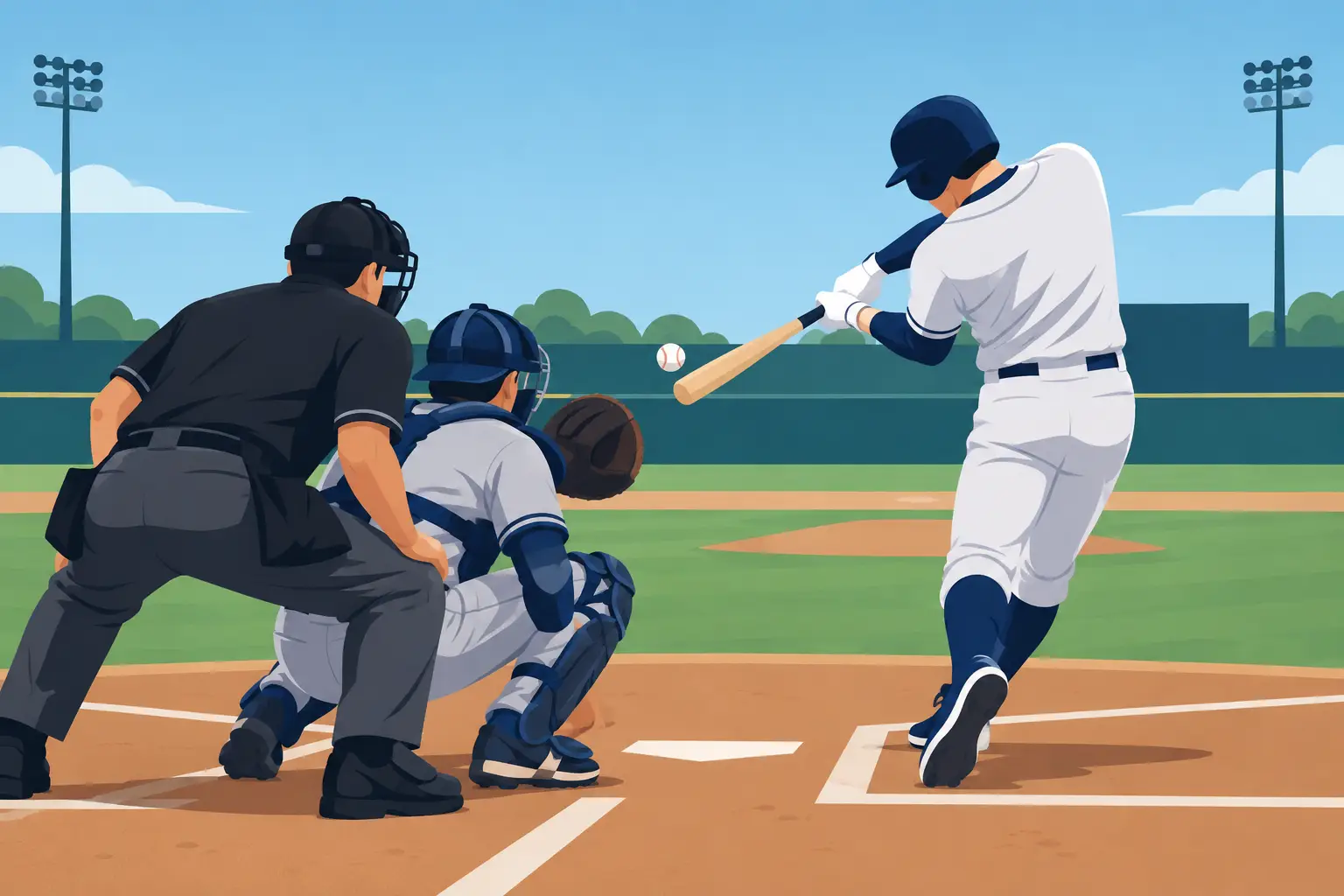
A line drive is hit to center field with a runner on third. The runner takes off as soon as the ball leaves the bat, then stops when the center fielder makes the catch. Safe or out? The answer starts with a question players, coaches, parents, and new umpires hear constantly: when can runners tag up?
A runner may legally leave a base to advance after a fly ball is first touched by a fielder. If the ball is caught, the runner must have tagged the base after that first touch before advancing. That sounds simple, but the timing of the touch, the catch, the runner’s return, and the defense’s appeal can turn one ordinary fly ball into a confusing call.
When Can Runners Tag Up? The Basic Rule
On a batted fly ball, a runner is allowed to leave the base when a defensive player first touches the ball. The runner does not have to wait until the fielder completes the catch, comes down, or throws the ball back to the infield.
That first touch is the key moment. A runner who stays in contact with the base until the fielder touches the ball can advance legally if the ball is caught. This applies to a fly ball hit to the outfield, infield, or foul territory.
The phrase “tag up” is often used two ways. Most people use it to mean a runner waits on the base and then advances after a catch. Technically, it can also describe a runner who left too soon, returns to touch the original base after the ball is first touched, and then tries to advance.
For the runner, the practical instruction is clear: stay on the base until you see or hear the first touch, then make your decision. For coaches and umpires, the job is to recognize that the runner’s legal opportunity to leave begins at first touch, not at the end of the catch.
A Catch Removes the Force, But It Does Not End the Play
When a fly ball is caught, the batter is out. That catch also removes any force play created by the batter becoming a runner.
For example, with a runner on first and less than two outs, a fly ball is caught in right field. The runner on first is no longer forced to go to second because the batter is out. If that runner advances, the defense must usually tag the runner rather than simply touch second base for a force out.
This is why runners must make a quick decision after a catch. They can tag up and advance, but they do so at their own risk. An outfielder may throw to third, home, or another base, and a runner can be tagged out if the throw beats them.
A smart runner considers the depth of the fly ball, the fielder’s arm strength, the number of outs, and where the ball is caught. A shallow fly ball may be too risky to advance on. A deep fly ball near the warning track may give the runner plenty of time.
What Happens if a Runner Leaves Too Early?
A runner who leaves the base before the fly ball is first touched has left early. If the ball is caught, that runner must return and retouch the original base after the first touch before advancing.
Suppose there is a runner on second and a fly ball is hit to left field. The runner leaves as soon as the ball is hit. The left fielder catches it. The runner can still correct the mistake by returning to second, touching second base after the catcher’s or fielder’s first touch, and then advancing if there is an opportunity.
If the runner never retouches the base, the defense can appeal. The runner is not automatically called out just because an umpire saw them leave early. The defense must make a proper appeal under the rules being used.
Usually, that means the defense appeals by tagging the runner or touching the base the runner left early while clearly indicating the appeal. Exact appeal procedures can differ among professional rules, NCAA, high school, Little League, and local leagues. The core idea stays the same: an early-leaving runner is vulnerable to an appeal after a caught fly ball.
First Touch Matters More Than the Completed Catch
This point surprises many people: a runner may leave when the ball is first touched, even if the fielder later drops it.
Picture a runner on third with one out. A fly ball is hit to medium-depth right field. The right fielder reaches up and touches the ball, but bobbles it and eventually drops it. The runner may leave when the fielder first touches the ball. Since the ball was not caught, the batter is not out, and there is no tag-up requirement because there was no catch.
The first touch still matters when deciding whether the runner left too soon. A runner who leaves after the fielder initially touches the ball has not left early, even if the fielder does not complete the catch.
On the other hand, if a runner left before any touch and the ball drops untouched, there is no caught fly ball to appeal. The ball is live, the batter becomes a runner, and the runners may advance subject to the usual risk of being tagged or forced out.
Tagging Up on a Foul Ball
A runner can tag up on a caught foul fly ball, too.
If a catcher catches a pop-up near home plate, or an outfielder catches a foul ball near the fence, the same first-touch principle applies. Runners may leave after first touch and try to advance after the catch. The ball being foul does not prevent a runner from advancing on a legal caught fly ball.
The risk may be different, though. A catcher who catches a foul pop-up may have a short throw to third base. An outfielder who catches a foul fly down the line may have a longer, more difficult throw. The runner should read the play, not just the word “foul.”
A foul tip is different from an ordinary foul fly ball. A foul tip that is caught by the catcher is treated as a strike and remains live, rather than as a caught fly ball for tag-up purposes. This is one reason that knowing the type of batted ball matters.
The Infield Fly Rule Creates a Different Decision
The infield fly rule can make runners hesitant because the batter may be out even if the ball is not caught.
With runners on first and second, or bases loaded, and fewer than two outs, an umpire may declare an infield fly on a fair fly ball that an infielder can catch with ordinary effort. Once it is declared, the batter is out. The runners are no longer forced to advance.
If the infield fly is caught, runners still need to follow the same timing rule if they want to advance: wait until first touch or return and retouch if they left early. If the ball falls untouched, runners may advance, but they are not forced. That can create a risky situation because runners who leave their bases may be tagged out.
The best habit for runners is to listen for the infield fly call and watch the ball closely. Do not assume the ball will be caught, and do not assume you are forced to run if it drops.
Three Game Situations That Clarify the Rule
Runner on third, one out, deep fly ball to center. The runner stays on third until the center fielder touches the ball, then runs home after the catch. That is a legal tag-up attempt. The play at the plate depends on whether the throw and tag beat the runner.
Runner on first, no outs, shallow fly ball to right. The runner leaves before the fielder touches the ball. The ball is caught, and the runner reaches second without returning to first. If the defense properly appeals first base, the runner can be called out for leaving early.
Runner on second, two outs, fly ball to left. The runner goes on contact because there are two outs and a catch would end the inning anyway. If the ball drops, the runner keeps going. If it is caught, the inning is over. Tagging up is not useful because the catch is the third out.
A Simple Teaching Point for Every Team
Players do not need a thick rulebook in the dugout to handle this play correctly. Teach one phrase: first touch, then go.
That phrase helps runners avoid leaving early, helps coaches teach baserunning without overcomplicating it, and gives developing umpires a clean starting point for judging an appeal play. Baseball Rules in Black and White is built around that kind of practical rule learning – clear terminology, real-game situations, and answers you can use before the next pitch.
The next time a fly ball goes up, watch the runner’s feet as closely as you watch the fielder’s glove. That one moment often tells you exactly what the call should be.