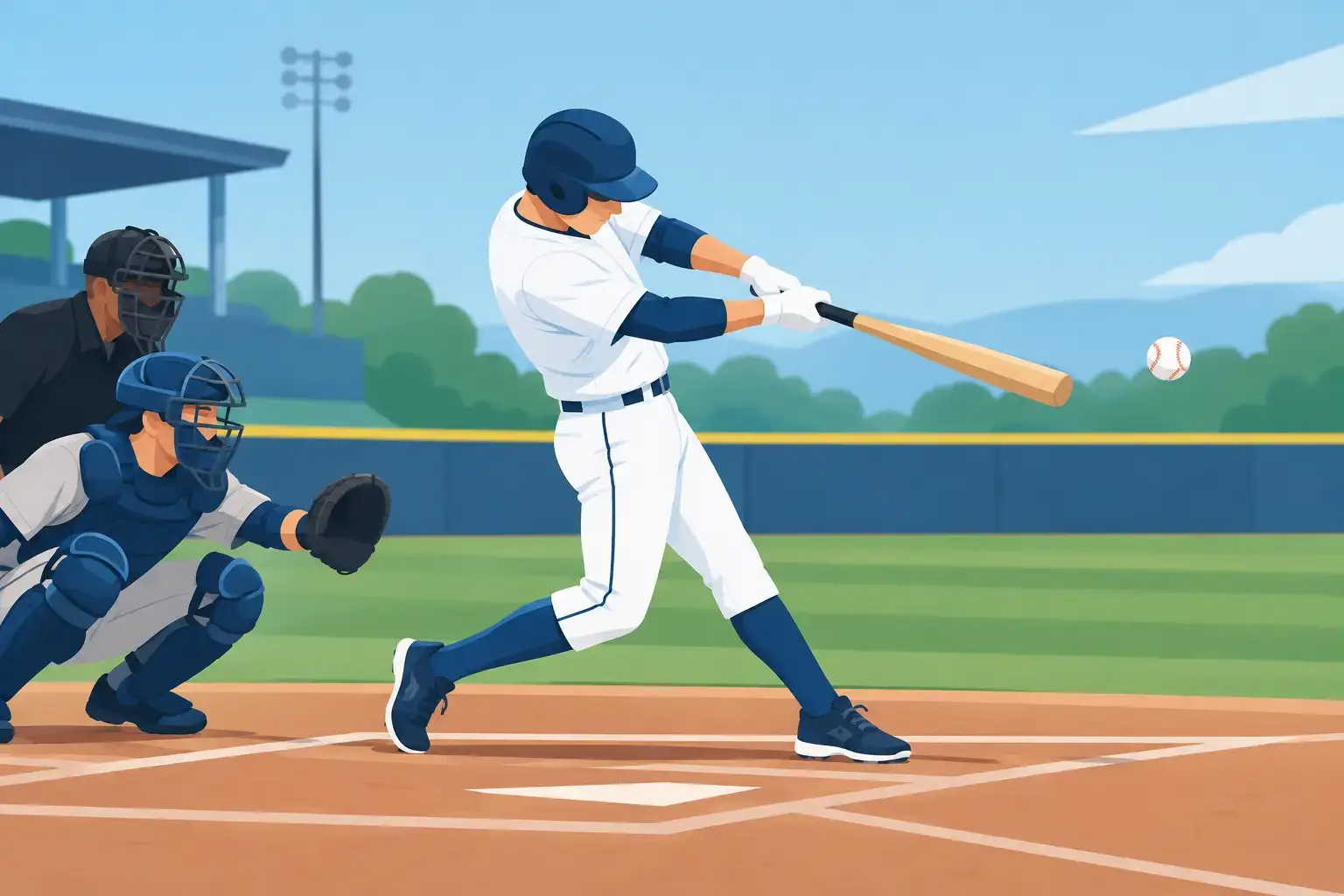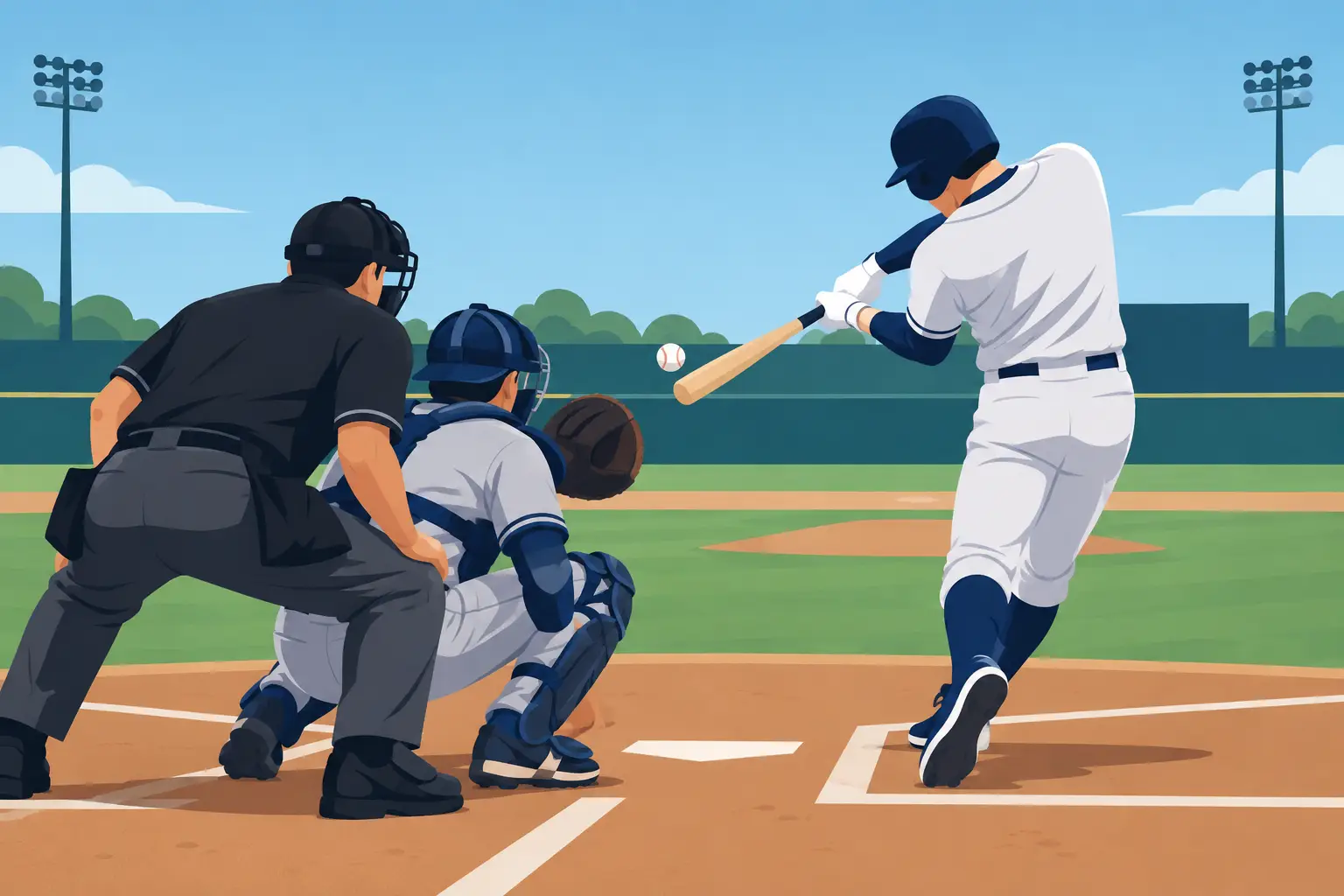
A third strike gets past the catcher, the batter takes off for first, and suddenly everyone in the stands has a different opinion. The dropped third strike rule explained simply is this: a strikeout does not always end the batter’s chance to reach first base. Whether the batter may run depends on the number of outs and whether first base is occupied.
The play is common enough to matter at every level of baseball, but unusual enough to create confusion. Players need to know when to run. Catchers need to know when to throw. Coaches, parents, and fans need to understand why an umpire can signal a strikeout while the batter is still safely standing on first.
The Dropped Third Strike Rule Explained
A batter may attempt to reach first base when strike three is not legally caught by the catcher and either first base is unoccupied or there are two outs.
That is the rule in its most useful form. It applies to a swinging third strike that skips in the dirt, a pitch the catcher misses, or a called third strike that is not caught. The batter has still struck out in the scorebook, but he becomes a runner and can reach first safely if the defense does not retire him.
The phrase “dropped third strike” can be a little misleading. The catcher does not have to literally drop a ball after catching it. What matters is whether the third strike was legally caught. If the ball hits the ground before the catcher controls it, it was not caught.
A cleanly caught foul tip is different. If the catcher catches a foul tip, it is a live ball and a strike. On strike three, the batter is out because the ball was legally caught. There is no dropped-third-strike opportunity.
The Two Conditions That Decide the Play
The easiest way to read the situation is to start with first base.
If first base is open, the batter may run after an uncaught third strike, regardless of how many outs there are. For example, with no runners on and one out, a pitch bounces away from the catcher on strike three. The batter should run to first. The catcher must recover the ball and either tag the batter or throw to first before the batter arrives.
If first base is occupied, the batter may run only when there are two outs. With a runner on first and one out, an uncaught third strike still produces an out on the batter. With a runner on first and two outs, however, the batter can run because the inning will not end until the defense records an out.
This second part is where many games get interesting. With two outs and runners on base, an uncaught third strike can create a scramble similar to any other live-ball play. The catcher may need to throw to first, while runners are advancing and the defense is trying to sort out coverage.
A quick game-situation guide
With zero or one out, the batter can run only if first base is unoccupied.
With two outs, the batter can run whether first base is occupied or not.
If first base is occupied with fewer than two outs, the batter is out when the third strike is not caught. The defense does not need to throw to first to retire that batter.
What Players Should Do
For hitters, the best habit is simple: on any strike three that is not clearly caught, run hard toward first unless the umpire has clearly ruled you out. Do not stop because you heard “strike three.” The verbal call tells you the pitch was a strike. It does not always tell you that the play is over.
For catchers, secure the ball first, then make the easiest out. If the batter is allowed to run, the catcher can tag the batter if he is nearby or throw to first base. A rushed throw into right field can turn a routine strikeout into a runner in scoring position, so control matters more than panic.
In some situations, a catcher may not have the best angle for a throw. A pitcher covering first, an alert first baseman, and clear communication can make the difference. This is why teams should practice the play instead of treating it as a rare oddity.
For runners already on base, the ball is live. They may advance at their own risk. When the batter becomes a runner, force situations can also develop or continue. With two outs and runners on first and second, for instance, the catcher may have a play at first, but the other runners are moving because they are forced to advance.
How the Defense Records the Out
When the batter is permitted to run, the defense has two basic choices. It can tag the batter-runner before he reaches first, or it can touch first base with possession of the ball before the batter-runner arrives.
A throw to first is often the routine choice, but it is not automatic. If the ball rolls only a few feet from the plate and the batter hesitates, a catcher may simply tag him. If the catcher cannot find the ball quickly, the batter may reach first safely even though he struck out.
The official scoring result can look unusual to newer fans. The pitcher receives a strikeout, while the batter may be credited with reaching first on a wild pitch or passed ball. A wild pitch generally means the pitch was too difficult to handle with ordinary effort. A passed ball generally means the catcher should have handled a catchable pitch. That scoring decision does not change the umpire’s ruling that the pitch was strike three.
Common Misunderstandings
One common mistake is believing that the batter can always run after a ball hits the dirt on strike three. That is not true. If first base is occupied and there are fewer than two outs, the batter is out.
Another mistake is assuming the catcher must throw to first whenever strike three gets away. Again, it depends. If the batter is not eligible to run, there is no need for a throw to retire him. If the batter is eligible, the catcher may throw, tag, or let a nearby fielder make the play.
There is also a difference between an uncaught pitch and a ball that is legally caught before the catcher loses it during a transfer. A catcher who demonstrates secure control can complete a legal catch even if the ball later comes loose while being removed from the glove. Those close plays depend on the umpire’s judgment about control and the action of the catch.
Why This Rule Exists
The dropped third strike rule keeps the defense responsible for completing a catch. A pitcher has earned a strikeout, but baseball still requires the defense to finish the play when the third strike is not caught.
The restriction involving an occupied first base with fewer than two outs prevents the offense from creating an unnecessary extra runner when the batter is already out. Once there are two outs, that concern disappears because the defense needs one more out to end the inning. The batter gets the opportunity to try for first, and the defense must complete the job.
Rule Differences at Youth and Local Levels
Most standard baseball rule codes use the same basic dropped-third-strike concept, but youth leagues and local organizations can adopt special playing rules. Some divisions limit advancement, use coach-pitch modifications, or have rules designed to speed up games and reduce confusion for younger players.
Before a season begins, coaches and umpires should confirm the governing rule set for that league. Do not assume that a tournament, recreational league, school program, and travel organization all use the same exceptions. A clear pregame understanding prevents arguments after the pitch gets away.
The next time strike three hits the dirt, watch first base, count the outs, and remember that the strikeout signal may be only the beginning of the play. Learning the rules of baseball does not have to be a full-time job, especially when you focus on the game situations that actually happen.