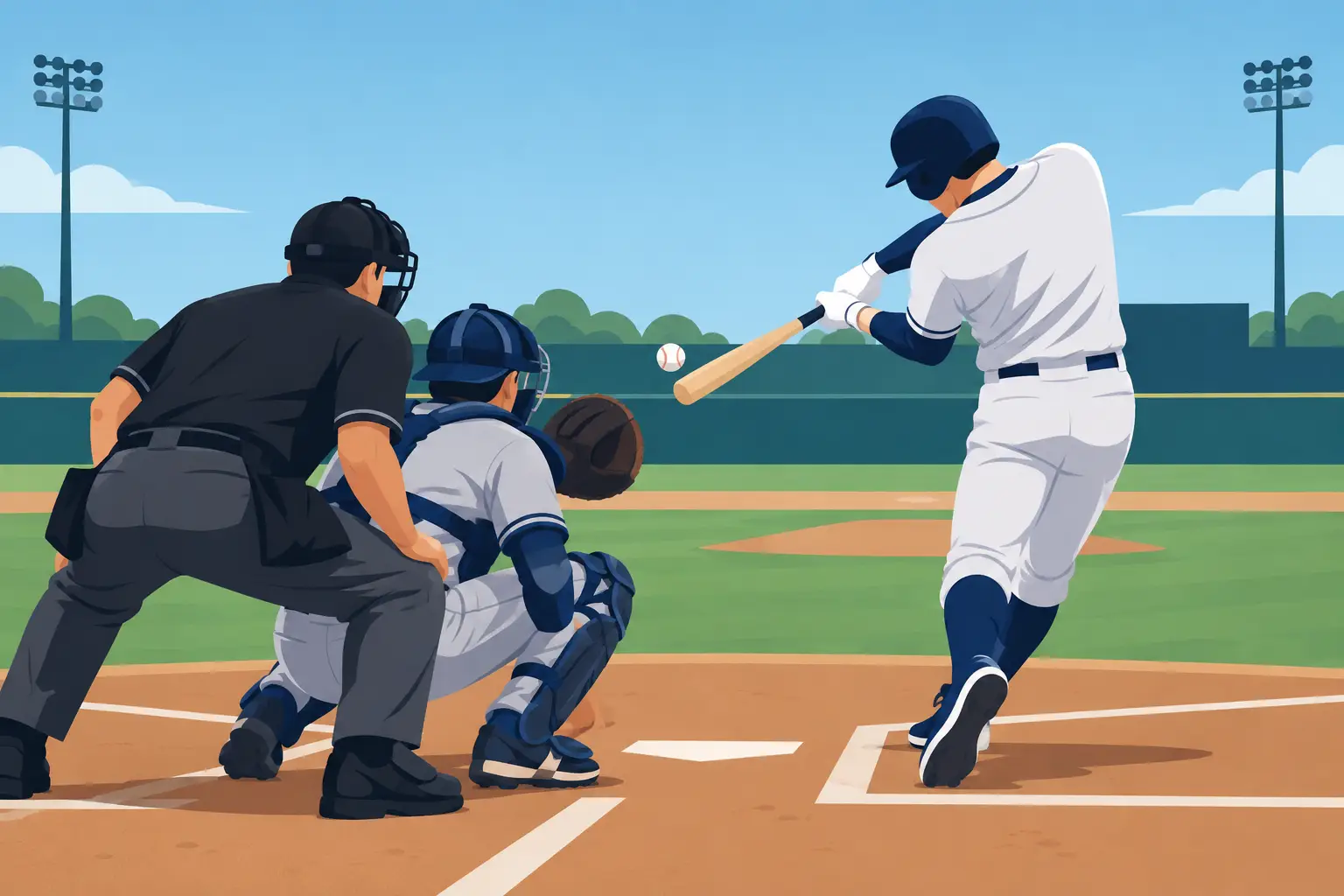
A high popup with runners on base can turn a routine play into an argument in seconds. One coach yells, “Catch it!” Another tells runners to stay put. Then the umpire calls, “Infield fly, batter is out,” even though the ball has not been caught. The infield fly rule is not a reward for the defense or a penalty for a bad pop-up. It exists to stop an unfair double play.
Once you understand the problem the rule solves, the call becomes much easier to recognize from the dugout, the stands, or behind the plate.
What is the infield fly rule?
The infield fly rule applies when a fair fly ball can be caught by an infielder using ordinary effort, with runners on first and second base, or with the bases loaded, and fewer than two outs.
When those conditions are present, the umpire declares the infield fly. The batter is out if the ball is fair, whether a fielder catches it or lets it fall untouched.
That last part causes most of the confusion. A dropped ball does not save the batter. The batter is already out because the rule removes the defense’s opportunity to intentionally let the ball drop and create easy force outs on the runners.
The ball remains live. That means runners still have decisions to make, and the defense can still make plays on them.
Why baseball needs the infield fly rule
Picture runners on first and second with one out. The batter hits a soft pop-up near the shortstop. Without the rule, the shortstop could let the ball drop on purpose. The runners, unsure whether the ball will be caught, may stay close to their bases.
Once the ball drops, the defense could force the runner from second at third base, then force the runner from first at second base. What looked like a routine popup could become a double play because the runners were trapped between two bad choices.
The infield fly rule takes away that trap. By declaring the batter out immediately, it removes the force play on the runners. A fielder can still tag a runner who is off base, but the defense cannot simply throw to a base for a force out caused by an intentional non-catch.
This is why the call may feel unusual at first. Baseball is treating the batter as out before anyone catches the ball because the defense had a realistic chance to catch it with ordinary effort.
The four conditions umpires check
An umpire does not call an infield fly just because a ball goes high in the air. All of the required conditions must be present.
1. There must be fewer than two outs
With two outs, runners are generally moving on contact because a caught fly ball would end the inning anyway. There is no need for the special protection the infield fly rule provides.
If there are zero or one out, keep watching for the rest of the conditions.
2. Runners must be on first and second, or the bases must be loaded
A runner on first base alone is not enough. A runner on first and third is also not enough because there is no runner forced to advance to third base.
The rule is designed for situations where runners at first and second could be trapped by a deliberately dropped popup. With runners on first and second or bases loaded, that risk exists.
3. The batted ball must be a fair fly ball
A bunt cannot be an infield fly. A line drive cannot be an infield fly either, even if an infielder could easily catch it.
A popup, a high fly ball, or another fly ball that is neither a bunt nor a line drive may qualify. The ball does not have to stay directly over the dirt portion of the infield. A shallow fly ball in the outfield can qualify if an infielder can make the catch with ordinary effort.
4. An infielder must be able to catch it with ordinary effort
“Ordinary effort” is the judgment piece. It does not mean the ball must be easy. It means a capable infielder should be able to make the play under normal game conditions.
Umpires consider the height of the ball, its location, weather, field conditions, and the amount of movement required. A ball drifting in heavy wind or carrying far into shallow outfield grass may not qualify. A second baseman moving back a few steps for a routine popup probably does.
The key question is not whether an infielder actually catches the ball. The question is whether the ball could have been caught with ordinary effort.
What the umpire says and when the batter is out
When the umpire recognizes the play, the proper verbal call is typically, “Infield fly, batter is out.” If the ball is near a foul line, an umpire may add, “Infield fly, if fair.”
The call should be made as soon as the umpire determines the conditions are present. Players and coaches need that information immediately because it changes the runners’ responsibilities.
If the ball lands fair, the batter is out. If the ball lands foul without being caught, it is simply a foul ball. The infield fly declaration does not turn a foul ball into an out.
If a fielder catches the ball, it is still a caught fly ball. Runners who left their bases must tag up before advancing. If the ball falls untouched in fair territory, the batter remains out, but runners are not forced to advance because the force has been removed.
What runners should do after an infield fly call
There is no single automatic answer for every runner. The right decision depends on where the ball is, whether it is caught, and where the defenders are positioned.
The safest first reaction is to locate the ball and listen for the umpire’s call. Do not assume the play is dead. It is not.
If the ball is caught, runners must retouch their base before trying to advance. Leaving early can result in an appeal play. If the ball drops fair, runners may advance at their own risk, but they can be tagged because they are no longer protected by a force play.
For example, a runner at second may see a popup fall in front of the shortstop and take third base. That can be a smart play if the defense is slow to react. But if the runner drifts too far off second and the shortstop picks up the ball quickly, a tag out is possible.
This is why runners should not freeze just because they hear “infield fly.” The batter is out, but the baseball is still live.
Common infield fly mistakes
The most common mistake is believing the ball must be caught for the rule to apply. It does not. A fair ball can drop untouched, and the batter is still out.
Another mistake is calling every popup an infield fly. The base situation, number of outs, type of batted ball, and ordinary-effort judgment all matter. A popup with only a runner on first is not an infield fly situation.
Players also sometimes think runners may advance freely after the call. They cannot. The force is gone, but runners can still be tagged off base. A live ball demands alert baserunning.
Finally, do not confuse an infielder’s position with the word “infielder.” An outfielder who runs in and catches the ball does not automatically prevent an infield fly call. What matters is whether an infielder could have made the catch with ordinary effort.
A quick way to recognize the call
When a fly ball goes up, work through four questions: Are there fewer than two outs? Are runners on first and second or bases loaded? Is it a fly ball rather than a bunt or line drive? Could an infielder catch it with ordinary effort?
If the answer is yes to all four, expect an infield fly call.
Rule codes and local league procedures can vary at the edges, especially in youth baseball, so coaches and developing umpires should know the rules used by their league. But the purpose stays the same: do not let the defense manufacture force outs by intentionally dropping a routine fly ball.
The next time a popup creates confusion, pause before arguing about whether the fielder caught it. Start with the situation. Once you know the outs, the runners, and the type of batted ball, the infield fly rule becomes one of baseball’s clearest examples of a rule protecting fair play.