A close play at first can turn one second into a full argument. The runner says safe, the defense says out, and everyone looks to the umpire. Baseball umpire signals settle that moment quickly. They give players, coaches, scorekeepers, and fans a clear visual answer, even when crowd noise makes a verbal call hard to hear.
Learning the common signals does more than help you keep up from the bleachers. It helps young players respond correctly, helps parents understand what just happened, and gives developing umpires a foundation for clear game management. The signal tells you the ruling. The rule behind it explains why the ruling was made.
Why baseball umpire signals matter
Umpires use signals to communicate calls consistently across the field. On a batted ball, the base umpire may be 100 feet from a coach. On a strike, the catcher, batter, pitcher, and dugout all need an immediate answer. A strong, decisive signal prevents confusion from spreading into the next pitch.
Still, a signal is not a complete rule interpretation. A safe signal does not necessarily mean a runner did everything legally. An out signal can result from a tag, a force play, an appeal, interference, or several other situations. This distinction matters when a play becomes more complicated than it first appears.
Mechanics can also vary slightly by level and umpire organization. Youth, high school, college, and professional umpires generally use the same core signals, but their timing, positioning, and accompanying verbal calls may differ. Focus first on what the signal communicates.
The ball, strike, and out signals
Ball
When a pitch is outside the strike zone and the batter does not swing, the plate umpire calls a ball. The usual mechanic is a clear verbal call of “ball,” often with no dramatic arm signal. That can surprise new fans who expect every ruling to come with a big gesture.
The key point is simple: a called ball is a pitch that was not struck and was not judged a strike. It is not automatically a bad pitch. A pitcher may intentionally throw outside the zone to set up the next pitch, avoid a hitter’s strength, or attempt an intentional walk.
Strike
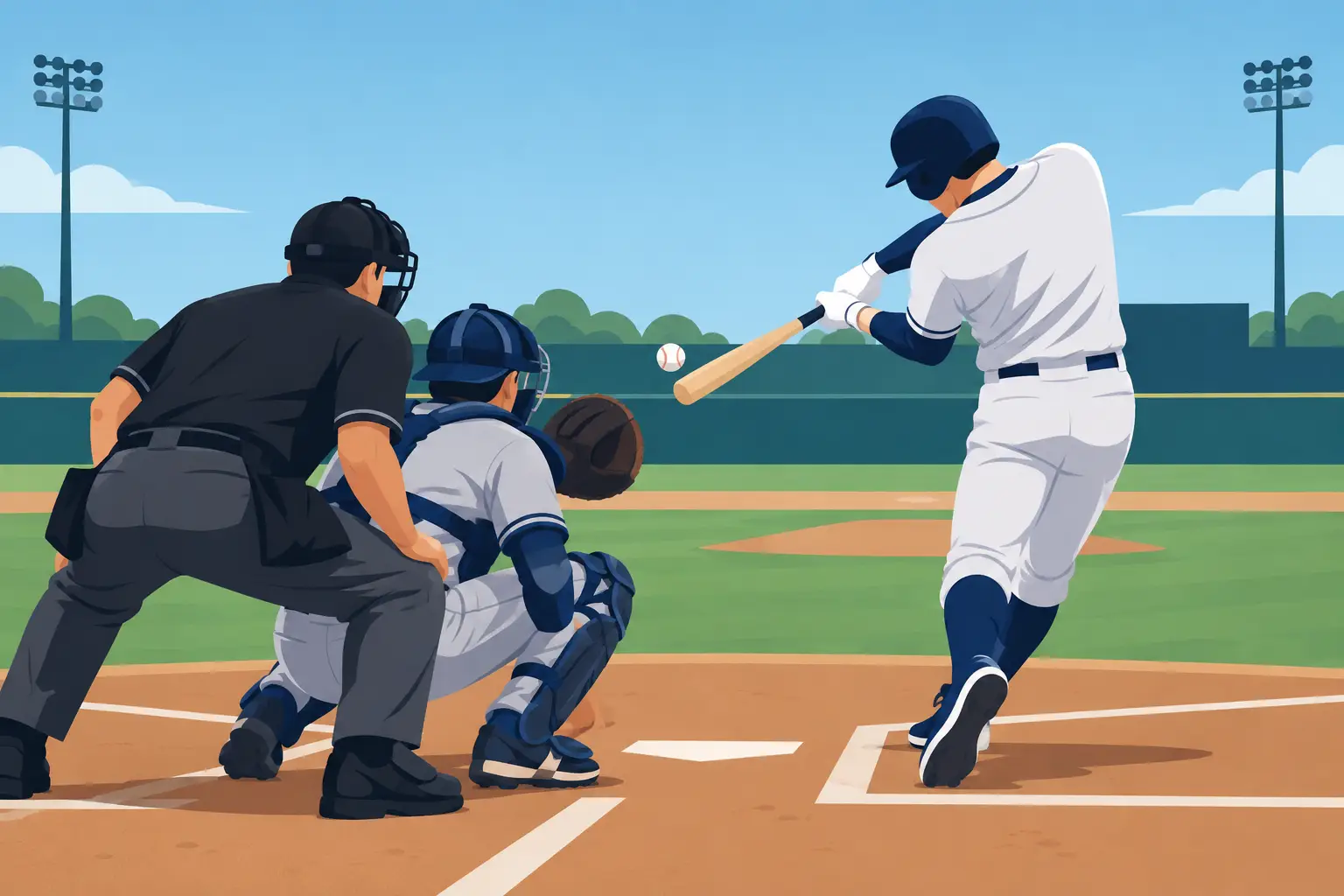
For a called strike, the plate umpire commonly makes a firm fist, often punching one arm to the side while calling “strike.” The delivery varies by umpire, but the message is unmistakable. A swinging strike may receive the same signal.
A strike can happen in more than one way. The batter may take a pitch in the strike zone, swing and miss, hit a foul ball with fewer than two strikes, or bunt a foul ball with fewer than two strikes. The signal tells the count result, not necessarily the reason for the strike.
Out
The out signal is one of the most recognizable in baseball: a clenched fist with a strong punch-like motion, usually paired with a verbal “out.” Base umpires use it on force plays, tag plays, caught balls, appeals, and other plays where an out is recorded.
Do not assume every play at a base is a force play. If a runner is tagged before reaching the base, the umpire may signal out, but the rule and the runner’s options can be very different from a force situation. Knowing that difference becomes especially useful when runners are on multiple bases.
Safe, fair, and foul calls
Safe
For safe, the umpire extends both arms straight out to the sides, palms down. It is a broad, visible motion designed to be seen by everyone. You will see it on close plays at bases, runners returning safely after a pickoff attempt, and some plays involving missed tags.
A safe signal does not always mean the runner reached the base before the ball. For example, a fielder may catch the ball but miss the tag, or a runner may avoid a tag legally. The umpire is ruling that no out occurred on that play.
Fair ball
When a batted ball is fair, an umpire points into fair territory with an extended arm. There is usually no verbal call of “fair ball.” The ball remains live, so players must keep playing.
This is one of the most useful signals for fans to recognize because a ball near the foul line can create hesitation. If the umpire points fair, fielders should react as though the ball is live. A fair ball that rolls beyond a base can still become foul if it settles in foul territory before passing first or third base, depending on the situation. That is why umpires often wait before making a final decision on a slowly rolling ball.
Foul ball
On a foul ball, the umpire calls “foul” and signals to stop action. The exact arm mechanic can vary, but the practical result is what matters: the ball is dead, and runners generally return to the base they occupied at the time of the pitch.
There are exceptions worth learning later, including a foul tip and a caught foul ball. A foul tip is a live ball, while a caught foul ball can result in an out and may allow runners to tag up. Those plays look similar for a split second, which is why the umpire’s ruling is so important.
Time, play, and no pitch
Time
The time signal is made by raising both hands above the head. It tells everyone that the ball is dead and play has stopped. An umpire may call time after a request from a batter, during an injury situation, when the ball becomes lodged in equipment, or when another dead-ball condition occurs.
Players should never assume time has been granted simply because someone asked for it. A batter stepping out, a coach calling from the dugout, or a catcher standing up does not stop a live ball unless the umpire grants time or another rule makes the ball dead.
Play
To put the ball back in play, the plate umpire typically points toward the pitcher and calls “play.” This may seem routine, but it matters. Once the ball is live, a pitcher can deliver, runners can attempt to advance, and a defense can make a play.
No pitch
A no-pitch ruling means a delivery does not count as a pitch. This can occur when time is called before the pitch, or when an umpire stops play for another reason before the pitch is completed. The umpire will use a clear dead-ball mechanic and verbal explanation.
A no pitch is different from a dead ball after the pitch. The timing of the umpire’s call and the specific situation determine whether the pitch counts, whether runners may advance, and whether any penalty applies.
Signals for unusual but important situations
Some calls are less common, but they often create the biggest disagreements because they involve multiple rules at once.
For an infield fly, the umpire raises an arm and declares “infield fly.” The batter is out if the rule applies, even if the fielder drops the ball. The ball remains live, so runners must still decide whether to advance, hold their base, or tag up. The call exists to prevent an easy double play when runners are forced to advance.
On interference or obstruction, umpires may use a delayed dead-ball signal by extending an arm while allowing the action to continue. These are not interchangeable terms. Interference usually involves an offensive player, coach, or other person illegally hindering a fielder. Obstruction involves a fielder who is not making a play on the ball illegally hindering a runner. The final award of bases depends on the type of infraction and what happens next.
For a balk, the umpire calls the violation and points or signals the dead-ball ruling according to the level’s mechanics. Balk rules can be especially challenging because some balks result in an immediate dead ball while others are delayed until the play finishes. The signal alone will not tell the full story.
How to read the call without guessing
When a call happens fast, watch the umpire before reacting to the crowd. Start with the broad signal: out, safe, foul, time, or fair. Then notice whether the ball remains live. Finally, look for a follow-up explanation or award. That order helps make sense of plays involving overthrows, tags, interference, or runners advancing after a catch.
For players, the best habit is to play until you hear or see time. For coaches and parents, the best habit is to ask what rule applied before deciding a call was missed. For new umpires, the best habit is to pair a clear signal with strong voice and proper positioning. Quiet or unclear mechanics invite avoidable confusion.
Baseball Rules in Black and White is built for these moments: turning a fast signal and a confusing play into a rule you can understand on your own time. Watch games with an umpire’s signal in mind, then follow the ball and the runners. Before long, the calls that once felt mysterious will start to make sense.