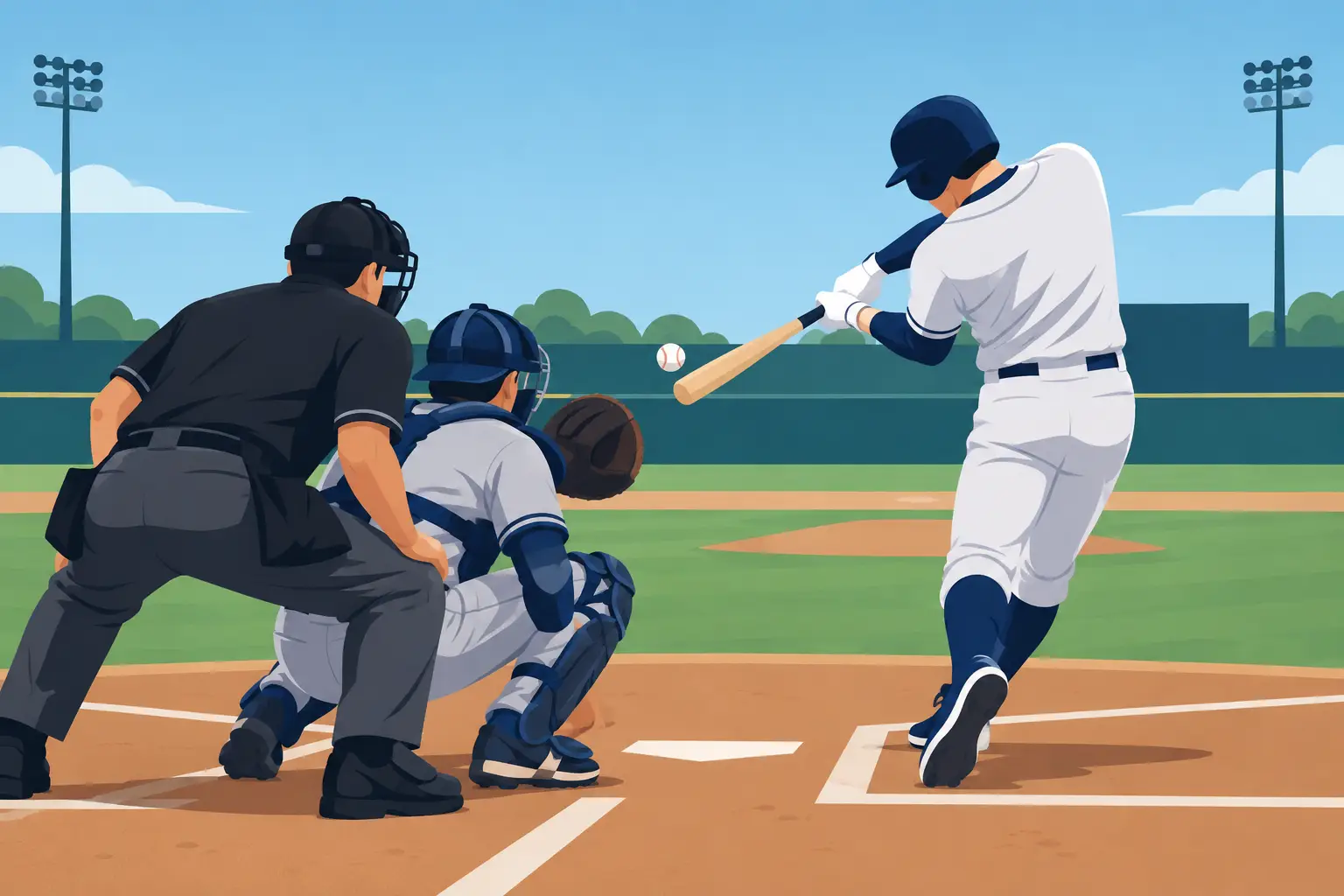
If a batter has two strikes and hits a foul ball, the batter usually remains at two strikes. A regular foul ball does not result in strike three.
However, there are important exceptions. A foul tip caught by the catcher is considered strike three, and a bunt that goes foul after two strikes results in the batter being out. Understanding these differences is essential for players, coaches, umpires, and baseball fans.
In this guide, we’ll explain exactly what happens when a batter hits a foul ball with two strikes, how the strike count works, what happens to runners, and the difference between a foul ball, foul tip, and foul bunt.
What Happens When You Foul a Ball With Two Strikes?
When a batter has two strikes and hits a regular foul ball, the batter is not automatically out.
The strike count remains at two strikes.
For example:
- Count: 1 ball, 2 strikes
- Batter swings and hits the ball into foul territory
- The ball is not caught
Result: The batter still has two strikes and gets another opportunity to hit.
This is why batters can sometimes hit several foul balls during the same at-bat after reaching two strikes.
According to MLB’s rules, a regular foul ball adds a strike only when the batter has fewer than two strikes. Once the batter already has two strikes, another ordinary foul ball does not create a third strike.
Does a Foul Ball With Two Strikes Count as Strike Three?
No, not if it is a regular foul ball.
This is one of the most common baseball-rule questions.
If the batter already has two strikes and hits a regular foul ball that is not caught, the count remains:
Two strikes.
The batter gets another pitch.
Example
A batter has:
0 balls, 2 strikes
The pitcher throws the next pitch.
The batter swings and sends the ball into foul territory.
The ball lands without being caught.
Result: The batter is still at two strikes.
The at-bat continues.
Why Doesn’t a Regular Foul Ball Become Strike Three?
The rule gives a batter additional opportunities after reaching two strikes because an ordinary foul ball is not treated as a third strike.
This is why you often see a two-strike batter continue to foul off pitches.
A batter might foul off:
- Fastballs
- Sliders
- Curveballs
- Changeups
- Two-seamers
- Other pitches
The count remains at two strikes as long as each result is an ordinary foul ball.
This can create a long two-strike battle between the pitcher and batter.
What Is a Foul Ball?
A foul ball is a batted ball that enters foul territory under the applicable baseball rules.
The location where the ball first contacts the field, whether a fielder touches it, and where it travels can determine whether it is fair or foul. The foul lines and foul poles are part of the boundaries used to determine fair territory.
For example, if a batter hits a ball that lands beyond the first-base line in foul territory, it may be ruled a foul ball.
A regular foul ball is generally a dead ball, meaning runners return to their bases unless another rule provides otherwise.
What Happens to the Runners on a Foul Ball?
On a regular foul ball, runners generally return to the bases they occupied when the pitch was delivered.
They do not simply get to advance because the ball was hit.
For example:
- Runner on first
- Two strikes on the batter
- Batter hits a foul ball
- Ball is not caught
The batter remains at two strikes, and the runner returns to first.
This is different from a foul tip, which is treated as a live ball when legally caught by the catcher.
What Is a Foul Tip?
A foul tip is different from a regular foul ball.
For a ball to qualify as a foul tip under the rules, it must go sharply and directly to the catcher’s hand or glove and be legally caught.
A foul tip is treated as a strike.
Most importantly, if the batter already has two strikes, a legally caught foul tip is strike three, and the batter is out.
Example of a Foul Tip With Two Strikes
The batter has:
2 strikes
The pitcher delivers a pitch.
The batter barely tips the ball, and it goes directly into the catcher’s glove.
Result: Strike three. Batter is out.
This is one of the biggest differences between a regular foul ball and a foul tip.
Foul Ball vs Foul Tip
| Situation | Result With Two Strikes |
|---|---|
| Regular foul ball, not caught | Batter remains at two strikes |
| Foul tip caught by catcher | Strike three, batter out |
| Foul bunt after two strikes | Batter is out if not legally caught |
| Foul fly ball caught | Batter is out |
| Fair ball resulting in a third strike | Batter is out |
The distinction between these plays is extremely important when understanding what happens with two strikes.
What Happens If a Batter Bunts Foul With Two Strikes?
This is an important exception.
If a batter bunts the ball foul with two strikes, the batter is out, provided the foul bunt is not legally caught.
So:
Regular foul ball + two strikes = batter continues
But:
Foul bunt + two strikes = batter is out
This rule prevents a batter from repeatedly bunting foul balls to avoid the consequences of a third strike.
Example
The batter has two strikes.
The batter attempts a bunt.
The ball rolls into foul territory and is not caught.
Result: The batter is out.
This is different from a normal swing that produces a foul ball.
What If a Foul Ball Is Caught?
If a fielder legally catches a foul fly ball before it touches the ground, the batter is out.
The batter does not get another opportunity simply because the ball was in foul territory.
For example:
- Two strikes
- Batter hits a high foul pop-up
- Catcher catches it
Result: Batter is out.
The out comes from the catch, not from the foul ball itself becoming strike three.
This distinction is important.
What If a Foul Ball Hits the Catcher?
The result depends on exactly what happens.
If the ball is a legally caught foul tip, it is treated as a strike. With two strikes, that means strike three.
If the ball is not a foul tip and instead becomes a regular foul ball, the applicable foul-ball rules determine the result.
This is why not every ball that slightly touches the bat and goes toward the catcher should automatically be called a foul tip. Under MLB’s definition, the ball must be sharply and directly caught by the catcher.
Can You Foul Off as Many Pitches as You Want With Two Strikes?
There is no fixed limit on the number of ordinary foul balls a batter can hit with two strikes.
A batter can continue fouling off pitches, and the count remains at two strikes, provided the result is an ordinary foul ball rather than one of the exceptions.
This is why two-strike at-bats can become lengthy.
A batter may foul off several pitches while trying to find a pitch to hit.
What Happens After a Two-Strike Foul Ball?
After a normal foul ball with two strikes:
- The ball becomes dead.
- The batter remains at two strikes.
- The runners generally return to their previous bases.
- The pitcher prepares for the next pitch.
- The at-bat continues.
The batter still needs to put a fair ball in play, draw a walk, get hit by a pitch under the applicable rules, or otherwise reach base.
Common Two-Strike Foul Ball Scenarios
Scenario 1: Regular Swing
The batter has two strikes and swings at a fastball.
The ball goes foul and is not caught.
Result: Two strikes remain.
Scenario 2: Foul Ball Caught
The batter has two strikes and hits a high foul ball.
The catcher catches it.
Result: Batter is out.
Scenario 3: Foul Tip
The batter has two strikes and tips the ball directly into the catcher’s glove.
Result: Strike three. Batter is out.
Scenario 4: Foul Bunt
The batter has two strikes and attempts a bunt.
The bunt goes foul and is not caught.
Result: Batter is out.
Scenario 5: Multiple Foul Balls
The batter has two strikes and fouls off three consecutive pitches.
Result: The batter still has two strikes after each ordinary foul ball.
The at-bat continues.
Does a Foul Ball With Two Strikes Count as a Strikeout?
No.
A regular foul ball with two strikes does not result in a strikeout.
However, there are exceptions:
- A foul tip caught by the catcher can be strike three.
- A foul bunt with two strikes results in an out if not caught.
- A foul fly ball caught by a fielder results in an out.
Understanding which type of foul play occurred is therefore essential.
Can a Runner Advance on a Foul Ball?
Normally, runners cannot simply advance on an ordinary foul ball because the ball is dead.
If a foul ball is caught, however, runners can potentially tag up and advance after the catch, subject to the applicable baserunning rules.
A foul tip is different because a legally caught foul tip is a live ball. MLB specifically notes that baserunners may advance at their own risk on a foul tip without needing to tag up.
Why Are Two-Strike Foul Balls Important?
Two-strike foul balls are an important part of baseball strategy.
For hitters, they provide another opportunity to see a pitch and avoid a strikeout.
For pitchers, two-strike situations are opportunities to finish an at-bat with:
- A swinging strikeout
- A called third strike
- A foul tip caught by the catcher
- A ball put into play
- Another result allowed by the rules
The batter’s objective is often to protect the plate and wait for a better pitch.
Common Questions About Foul Balls With Two Strikes
Does a foul ball with two strikes count as strike three?
No. A regular foul ball does not count as strike three when the batter already has two strikes.
Can a batter foul off multiple pitches with two strikes?
Yes. There is no set limit on ordinary foul balls during a two-strike at-bat.
Is a foul tip with two strikes an out?
Yes, if the ball qualifies as a foul tip and is legally caught by the catcher, it is strike three.
Is a foul bunt with two strikes an out?
Yes. A bunt that goes foul after two strikes results in the batter being out if the ball is not legally caught.
Can a foul ball be caught for an out?
Yes. A legally caught foul fly ball results in an out.
Do runners advance on a foul ball?
Generally, no. A regular foul ball is dead, and runners return to their bases. A caught foul fly ball is different because runners may tag up, while a legally caught foul tip is a live ball.
What is the difference between a foul ball and foul tip?
A regular foul ball is generally a dead ball and does not add a third strike when the batter already has two strikes. A legally caught foul tip is a strike and can be strike three.
What happens if the batter has two strikes and fouls the ball into the stands?
The batter remains at two strikes, assuming it is an ordinary foul ball and no other rule applies.
Final Takeaway
So, what happens when a batter hits a foul ball with two strikes?
In most cases, nothing changes in the strike count. The batter remains at two strikes and gets another pitch.
The important exceptions are:
- Regular foul ball: Batter stays at two strikes.
- Foul tip caught by catcher: Strike three and batter is out.
- Foul bunt with two strikes: Batter is out if the bunt is foul and not caught.
- Foul fly ball caught: Batter is out because the ball was caught.
Understanding these differences makes it much easier to follow a two-strike at-bat and understand why some foul balls keep the at-bat alive while others end it.
For more easy-to-understand baseball rules and explanations, explore Baseball Rules in Black and White for additional rule guides and baseball questions.
Related Baseball Rule Guides
- What Is the Infield Fly Rule in Baseball? — Learn when the infield fly rule applies and what happens to the batter and runners.
- Baseball Rules Explained — Explore more baseball rules, situations, and easy-to-understand explanations.